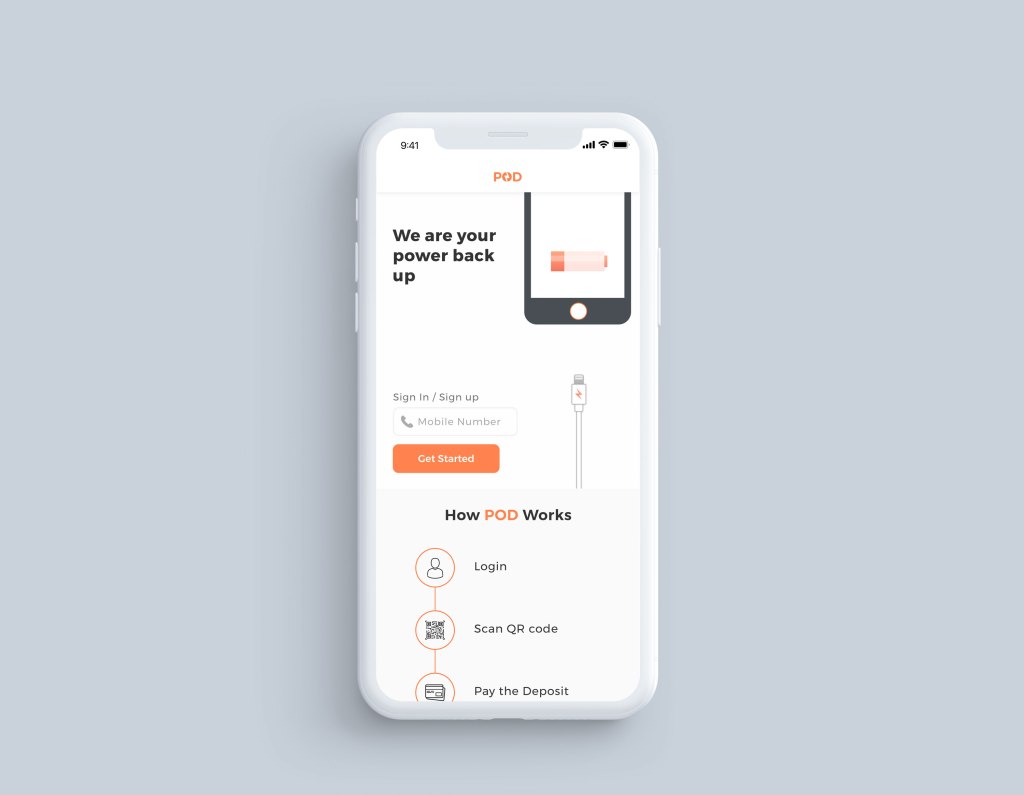
Power on-demand is a power bank rental system designed to help people charge their smartphones on the go. Smartphones have become an indispensable part of our fast paced lives. Other than communication we use them for a multitude of tasks. They essentially break the spatial boundaries by bringing different possibilities into existence.
But do we have an indefinite supply of power compared to our usage habits?
Organisation : Jugnoo
Role: UI Design, UX, Product co-ordinator
Team: The team included myself, CTO, the CEO and an engineer.
I was responsible for user research, user experience design, information architecture, wireframing and visual design.
IDENTIFYING THE PROBLEM
USER RESEARCH
For the exploratory research I conducted semi-structured interviews understanding the smartphone usage habits of employees within the firm. We asked questions like – What tasks do they perform using their smartphones? How performing different tasks impacted their power backup? How often do they need to charge their phones? How useful are power banks according to you and why?
INSIGHTS
- Battery life – The battery goes down by the end of the day depending on the type and number of tasks.
- Power banks can be extremely useful – It was highlighted many times that running low on a battery and being outdoors can lead to bitter experiences. Being so technology dependent for connecting with family/friends, having access to a power bank when outdoors can be very useful.
- Charging a power bank is an overhead – Many people forget to charge their personal power banks and gradually stop using them.
CONCEPTUALISING A POSSIBLE SOLUTION
With the insights from exploratory research, POD was conceptualised as a power bank sharing system that helps users find the nearest locations from where they can rent a power bank.
INFORMATION ARCHITECTURE
I mapped the user journey to define the process of renting a power bank and returning it. The power banks would be available at different public places similar to the concept of bi-cycle sharing.

WIREFRAMES
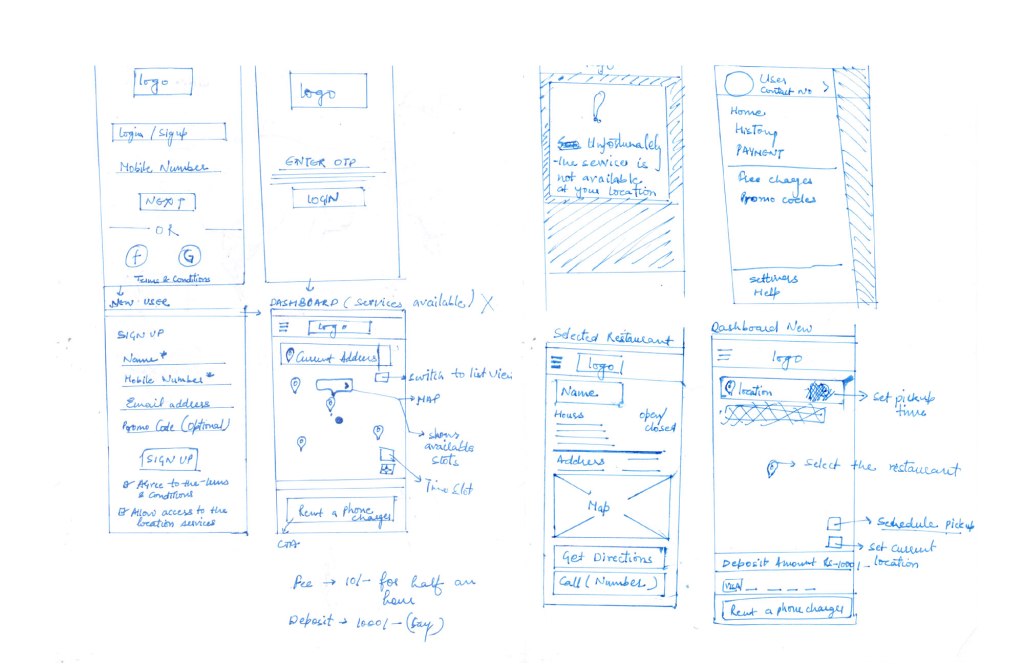
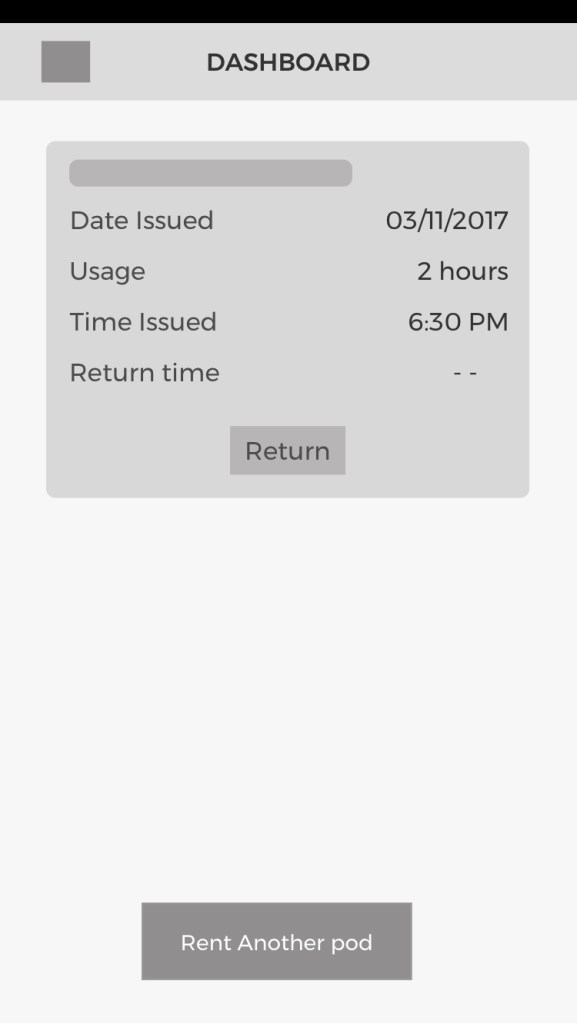
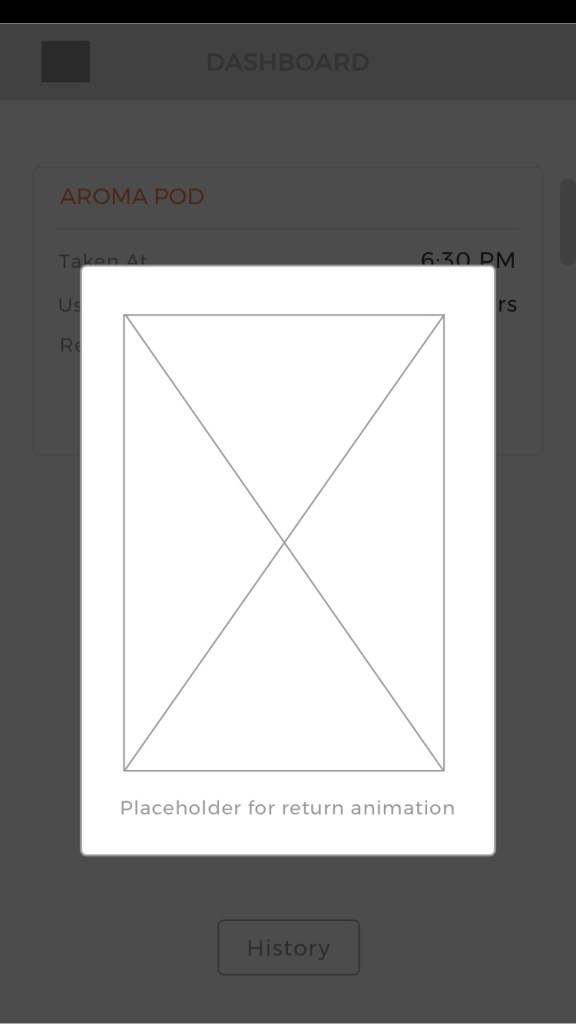
Based on the information architecture I created wireframes as lo-fi prototype of the key screens of our application to communicate the information and UI elements we wanted on each screen. The wireframes were then sense-checked to identify the challenges in user experience and iterated further.
USER INTERFACE
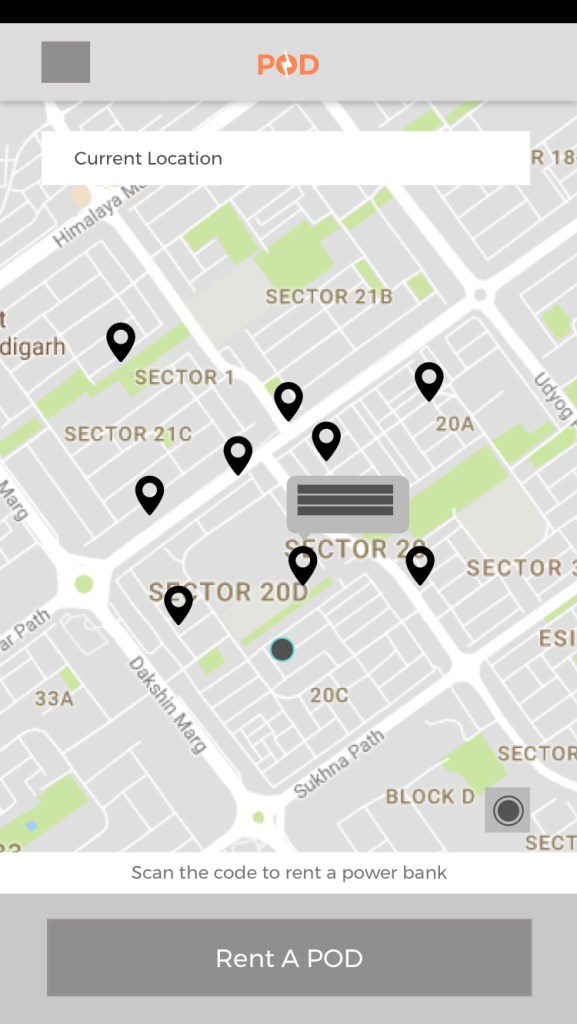
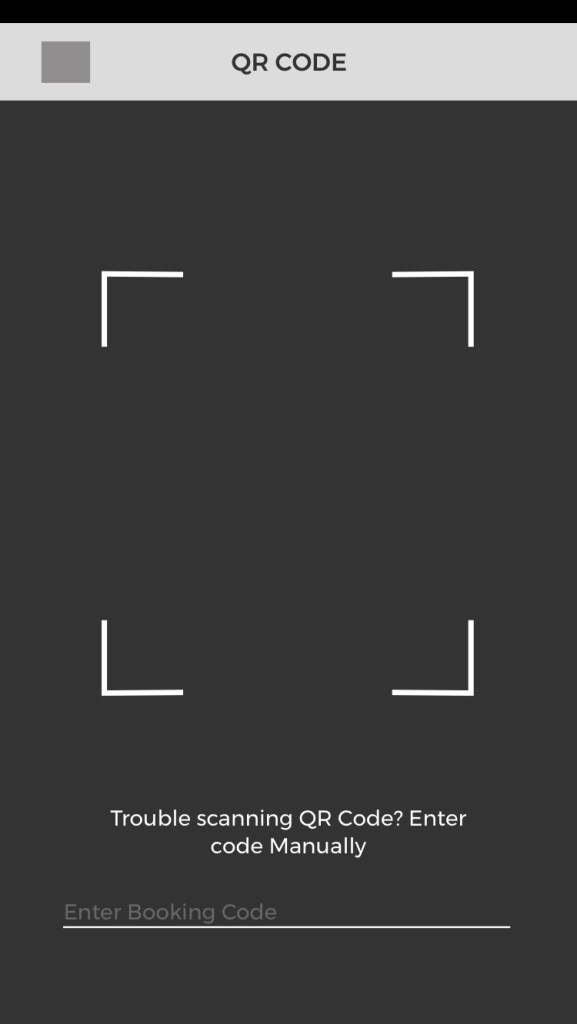
The final design was created with minimum possible steps to make the pick-up process faster, keeping in mind low battery levels at the time of request.
WORKING PROTOTYPE
 Isha Goyal