
The Damage Claims Recovery Portal (DCRP) is a centralized platform used by business users at Maersk to efficiently recover money from multiple recovery parties, including customers, container repair vendors and terminals responsible for damages done to the equipments.
DCRP streamlines this process by consolidating all necessary data into a single interface, enabling users to identify high cost recoveries, liable parties, manage claims, and track recoveries seamlessly—eliminating the need to switch between multiple applications.
To comply with my non-disclosure agreement, I have omitted and obfuscated confidential information in this case study. The information in this case study is my own and does not necessarily reflect the views of Maersk.
My Role
UX Researcher, UX Designer
Timeline
11 months and ongoing
Tools Used
Figma, Miro, Insights Hub (internal)
Background
Maersk spends on average $410 Mil yearly (based on 2022 data) in repairing containers. From all the damages a total of $203Mil are estimated to be caused by the customers and hence recoverable. Success of these recoveries depends on timely identification and notification of liability to the respective party. EMR team used legacy systems for recovery process and recovered $42.2 Mil in 2022 where remaining $160 Mil was not recovered due to multiples gaps in the system and existing processes.
Shipping Journey
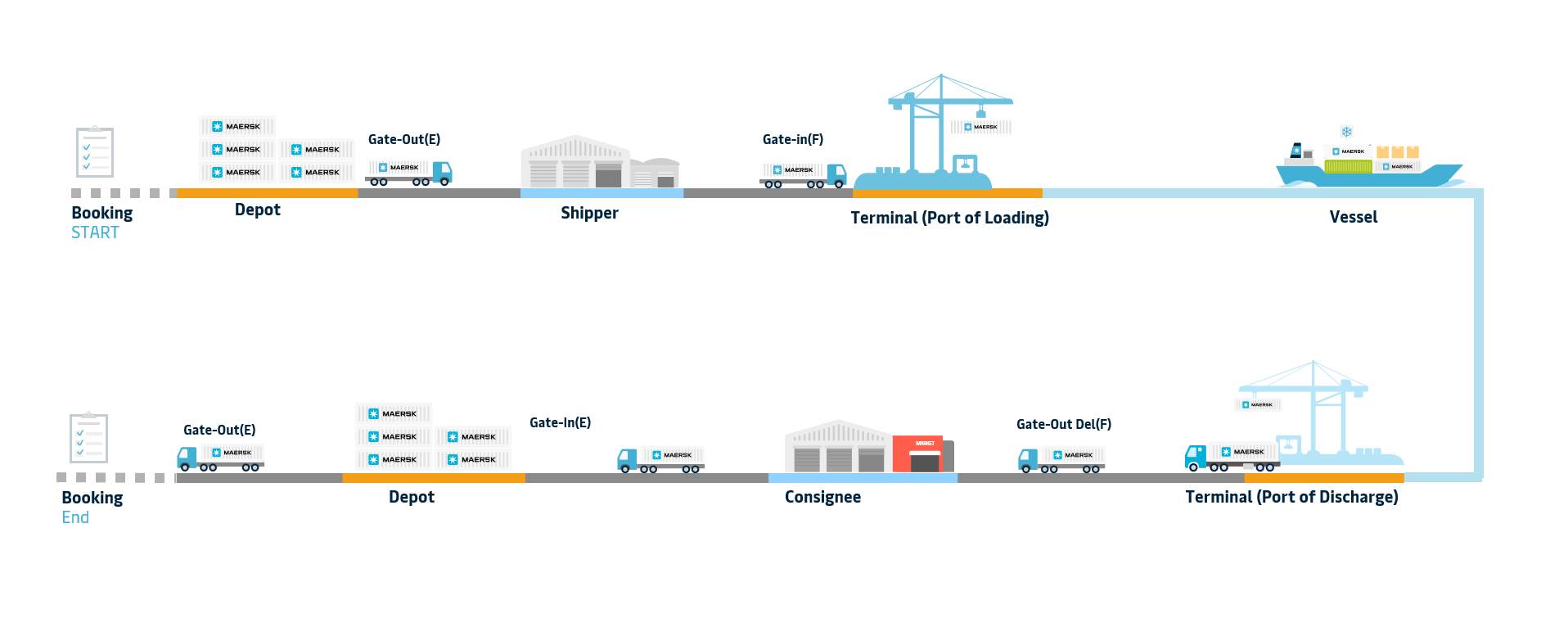
Maersk leases its containers to the customers for enabling shipment of cargo. During the entire journey as illustrated below, the containers are handled by different parties based on where it is in the journey. Depending on the cargo/handling/external factors the containers can get damaged for which, Maersk currently bears the repair cost.
Discovery
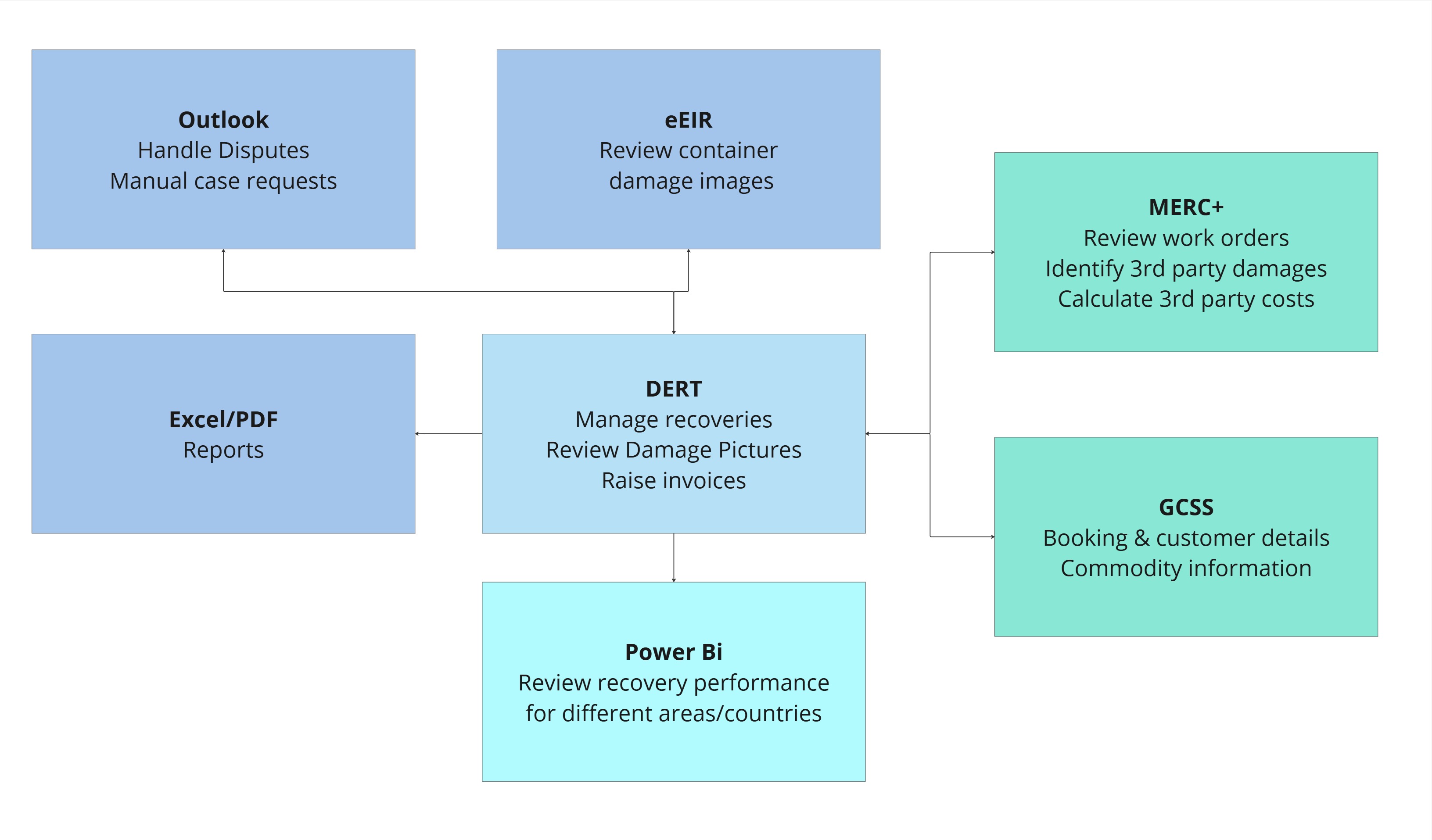
Multiple interviews with the business users and shadowing sessions were conducted to understand and unravel the legacy systems which users relied heavily on. The exercise helped me in identifying the key problem areas to be addressed.
Legacy Ecosystem
Findings/Insights
Business Users
- Different platforms for reviewing work orders and damage images.
- No visibility of high value recovery cases. A user would only discover this amount by manually calculating the recoverable cost from the work order.
- Manual calculation of the recovery amount from the total work order cost.
- No visibility/capability to identify cases that do not have damage images.
- Long and tedious recovery processes with unnecessary steps in the legacy system.
- Lack of visibility on the status of a recovery case in the legacy system.
- The system currently lacks the capability to distinguish recoverable cases based on the type of container booking — specifically, whether it is an import or export. As export bookings are presently non-recoverable due to operational constraints, this limitation hinders accurate case identification
Customers
- Customers received invoices too late after the booking was completed.
- Lack of damage proofs led to confusion and loss of trust.
Problem Statements
- How might we streamline the damage claims recovery process to maximize the amount recovered from liable parties?
- How might we enable timely identification of liability to ensure customers and responsible parties are notified before recovery deadlines are missed?
Design Solution
The new system aimed to make the data available from different systems to streamline the process in a single system.
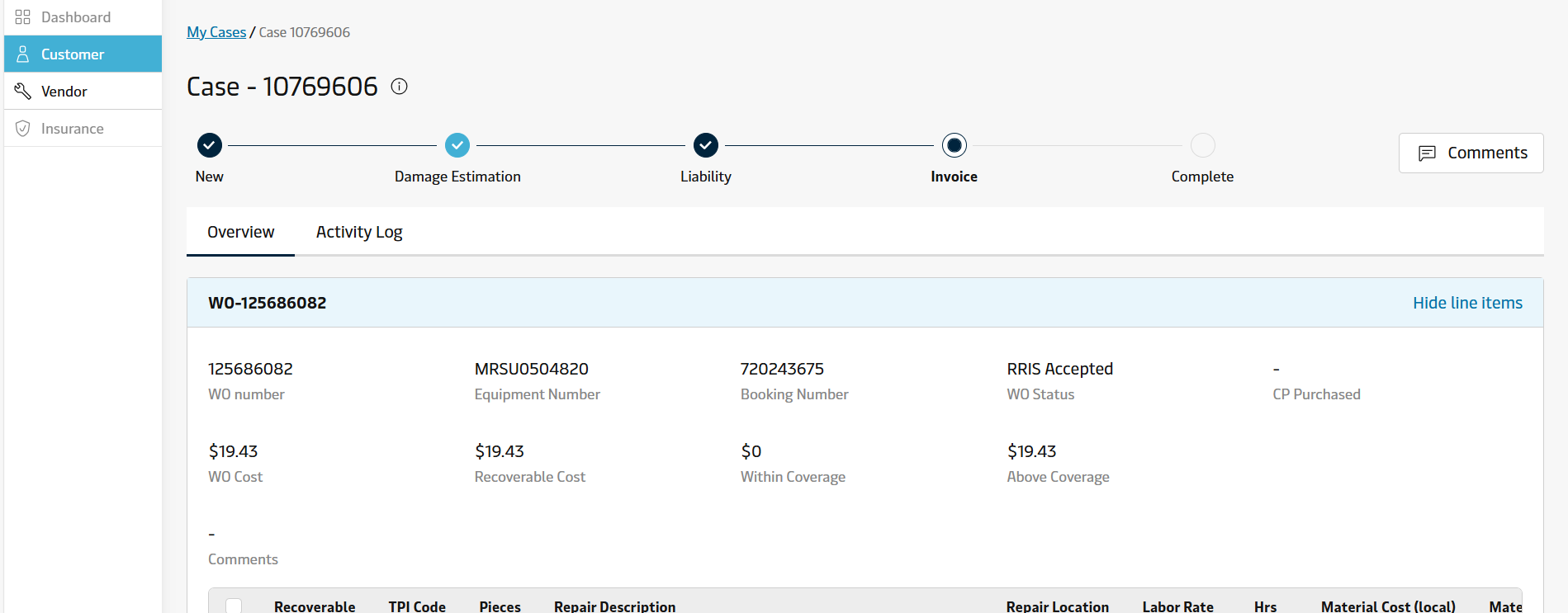
Users are now aware of the progress they have made in a recovery case with a progress stepper. The status of a case is also reflected in the overview list, which can also be filtered.
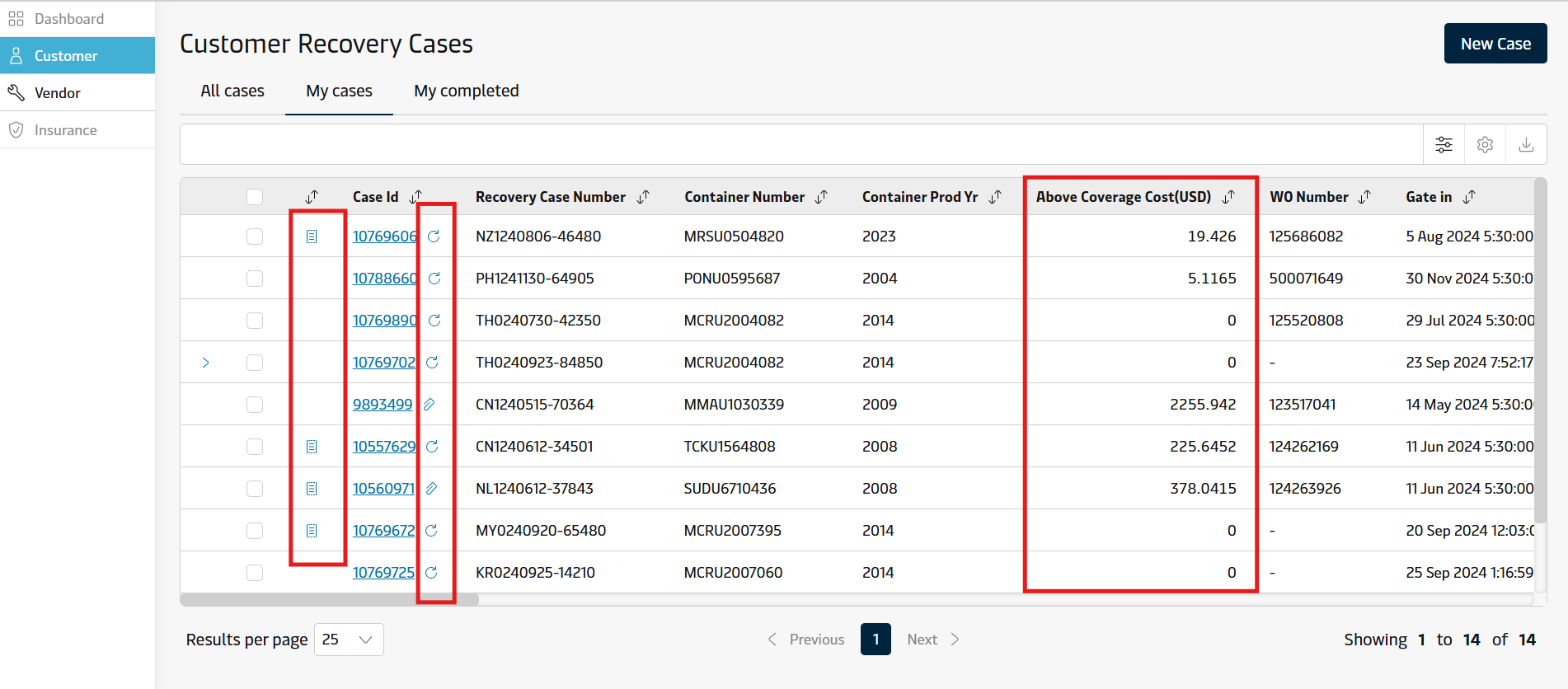
- Some countries require a cooling period of x days before an invoice can be issued to the customer legally, the system reflects that on the overview grid by showing a ready for invoicing icon
- Image availability for a recovery case is now visible from the overview list.
- The recovery amount is auto calculated and displayed in the grid which allows the user prioritize high value recovery cases.
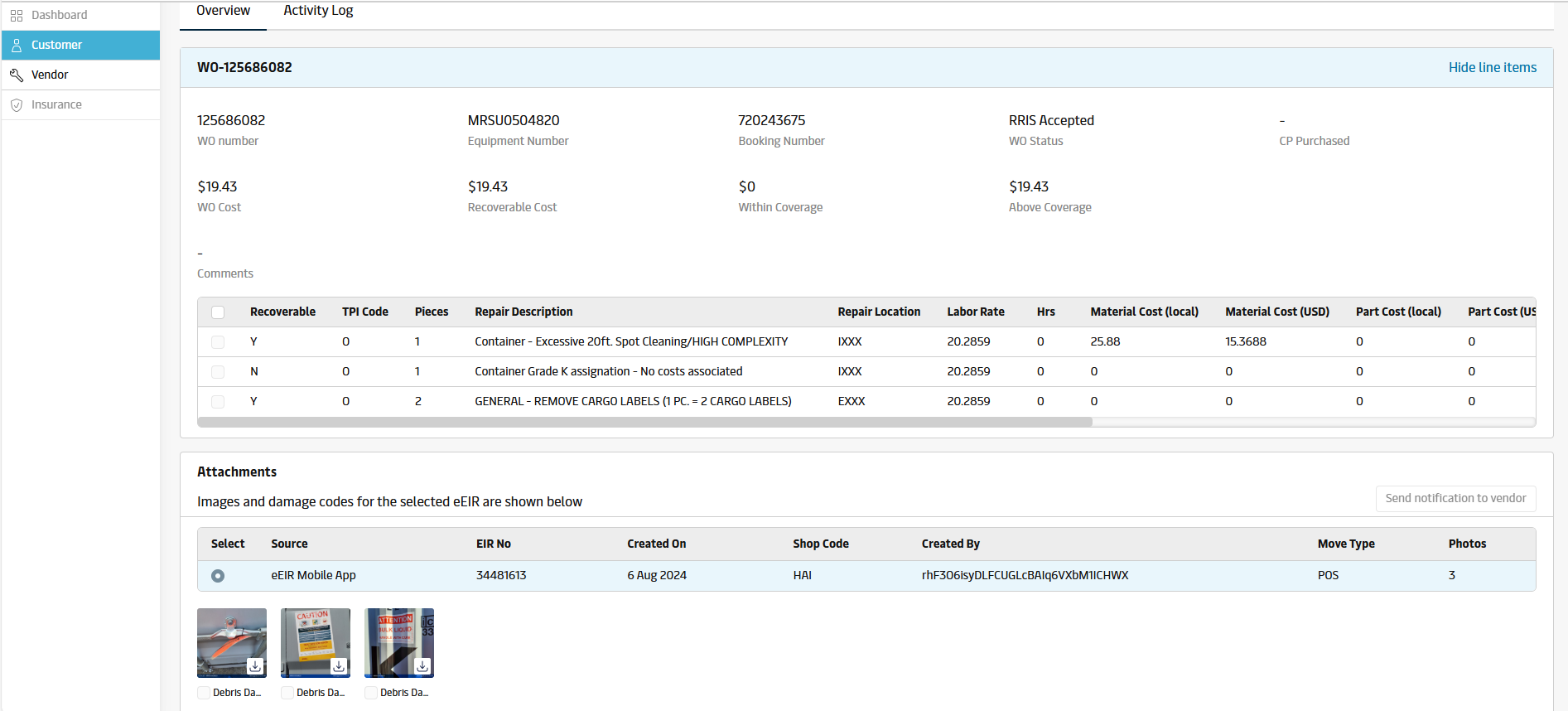
Integration with different image storage systems now allows the user to compare the damages with the work order details.
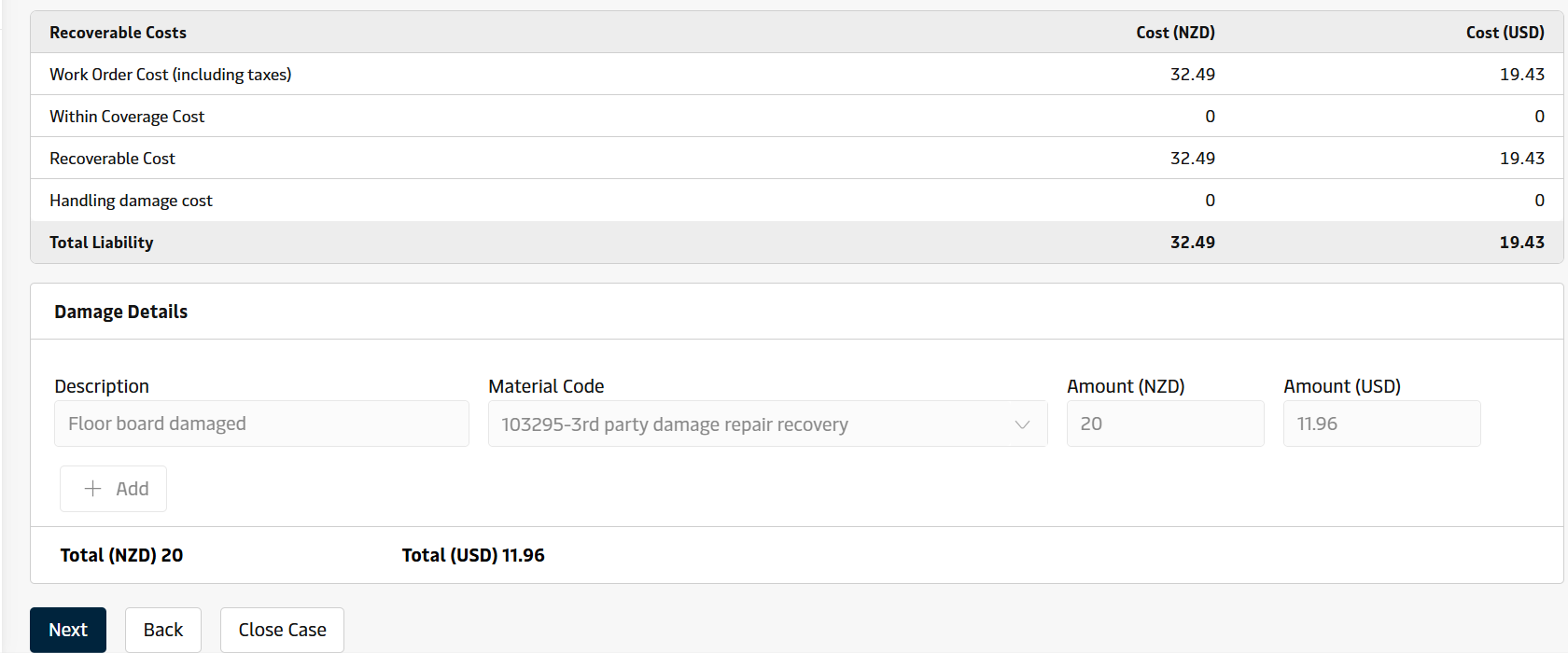
The system calculates the cost recoverable from users automatically, while also giving them the flexibility to modify the costs based on their evaluation of the case.
Usability Testing
Multiple usability testing sessions were conducted with the users in a moderated fashion
A clickable prototype was shared with the users and tasks were given to evaluate if they were able to complete the tasks without any support. Early testing and feedback cycle allowed us to incorporate major feedbacks before we went into the development cycle.
Post development SUS and NPS scores were also calculated with the help of our internal insights hub platform.
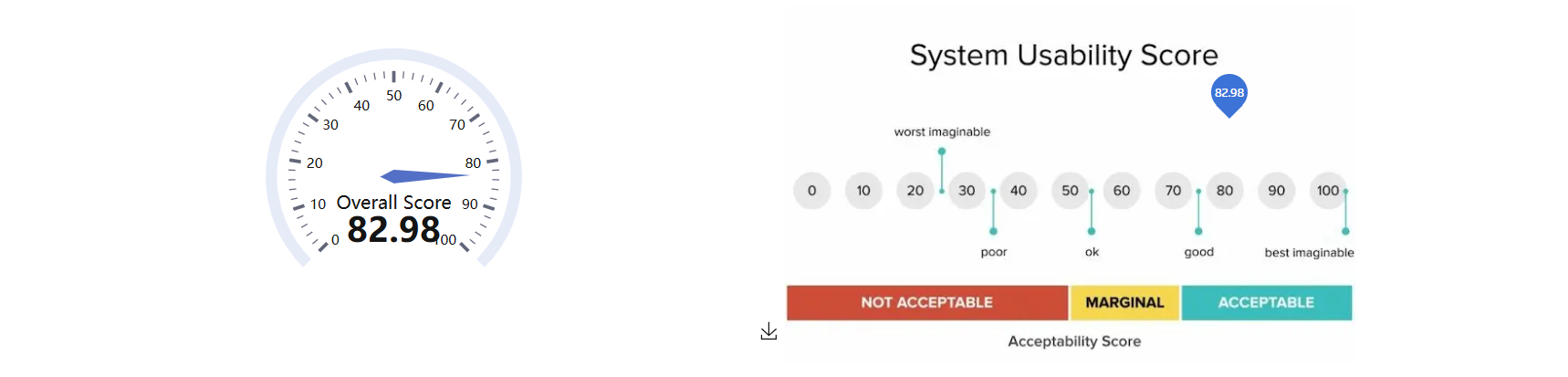
Impact & Results
Recovery Target
↑$4.5 Million
- Target – $30 Million
- Achieved – $34.5 Million
Invoice Count
↑16%
- Increase in the number of total invoices sent
Invoice Amount
↑41%
- Increase in dollar value of invoices
Takeaways
This project has focused on user research and identified needs. Generally, if you follow users and the process, a solution inevitably follows. Interviews with the business users and co-creating with them enabled me to empathise better, understand different perspectives and find out better solutions.
Next Steps
We are building image analytics intelligence this year for automated recoveries.
The recoveries from different customers/ countries/regions will be used to drive the sales for container protect which is a value added offering given to the customers for covering the damages done to containers, which will reduce the number of invoices sent to the customers.
 Isha Goyal